AI wedding photos for guests: how an AI photoshoot works at an Indian wedding (and the rules)
A selfie goes in, a framed portrait in a palace courtyard comes out, and your hashtag travels with it. Here's how an AI photoshoot works at an Indian wedding, and the consent, privacy and labelling rules that keep it graceful.
 By LIT VOW Editorial7 min read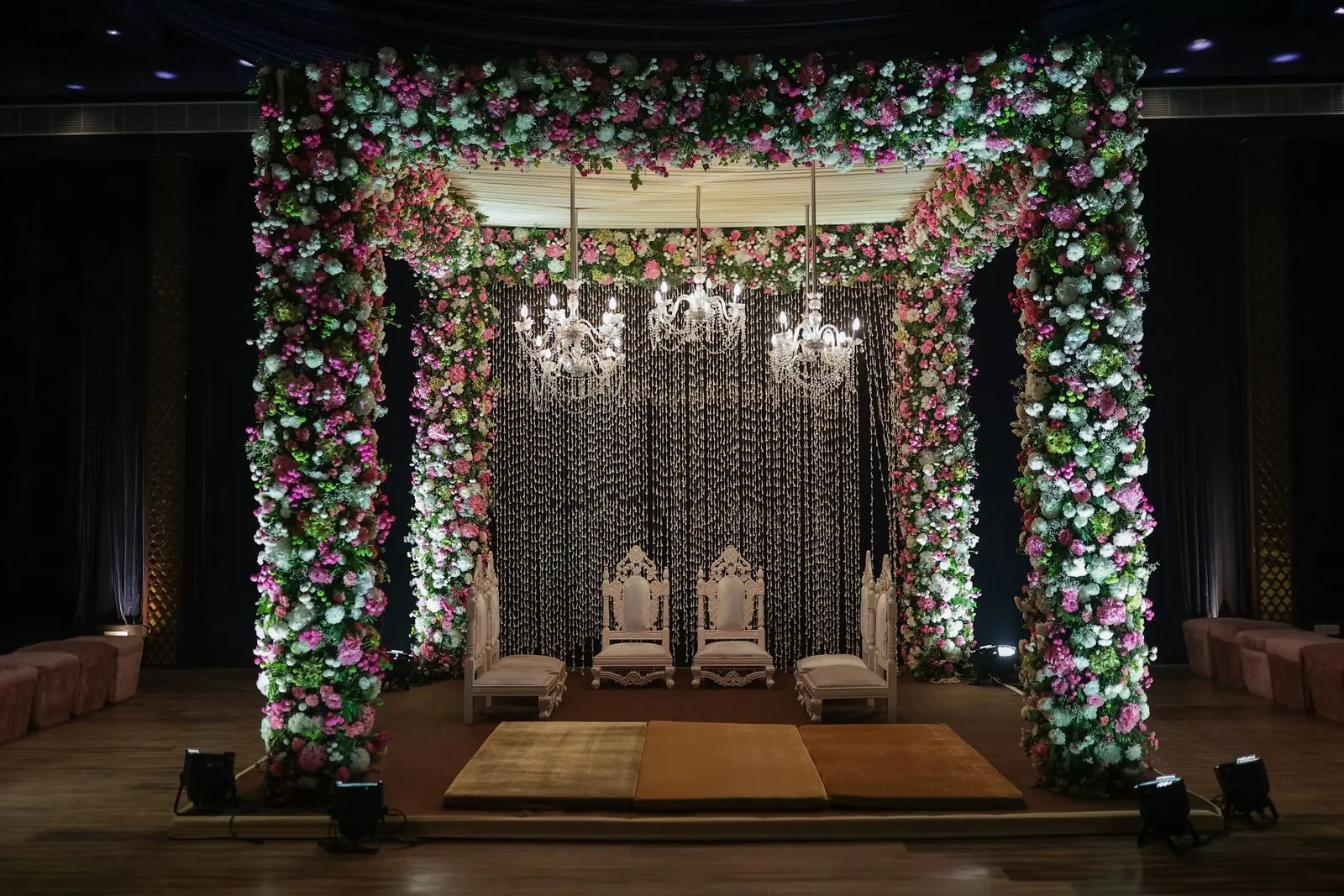
Key takeaways
- An AI wedding photoshoot turns a guest's selfie into a framed portrait set in a scene the couple has approved, ready for Instagram stories.
- Guests appear with the couple only if the couple opts in; every guest chooses whether to take part.
- Under India's DPDP Act 2023, consent must be free, specific and informed, and the selfie should be erased once the portrait is made.
- India's IT Rules amendment (in force from 20 February 2026) expects AI imagery to carry a prominent label and provenance metadata — ask your provider how it handles this.
What is an AI wedding photoshoot?
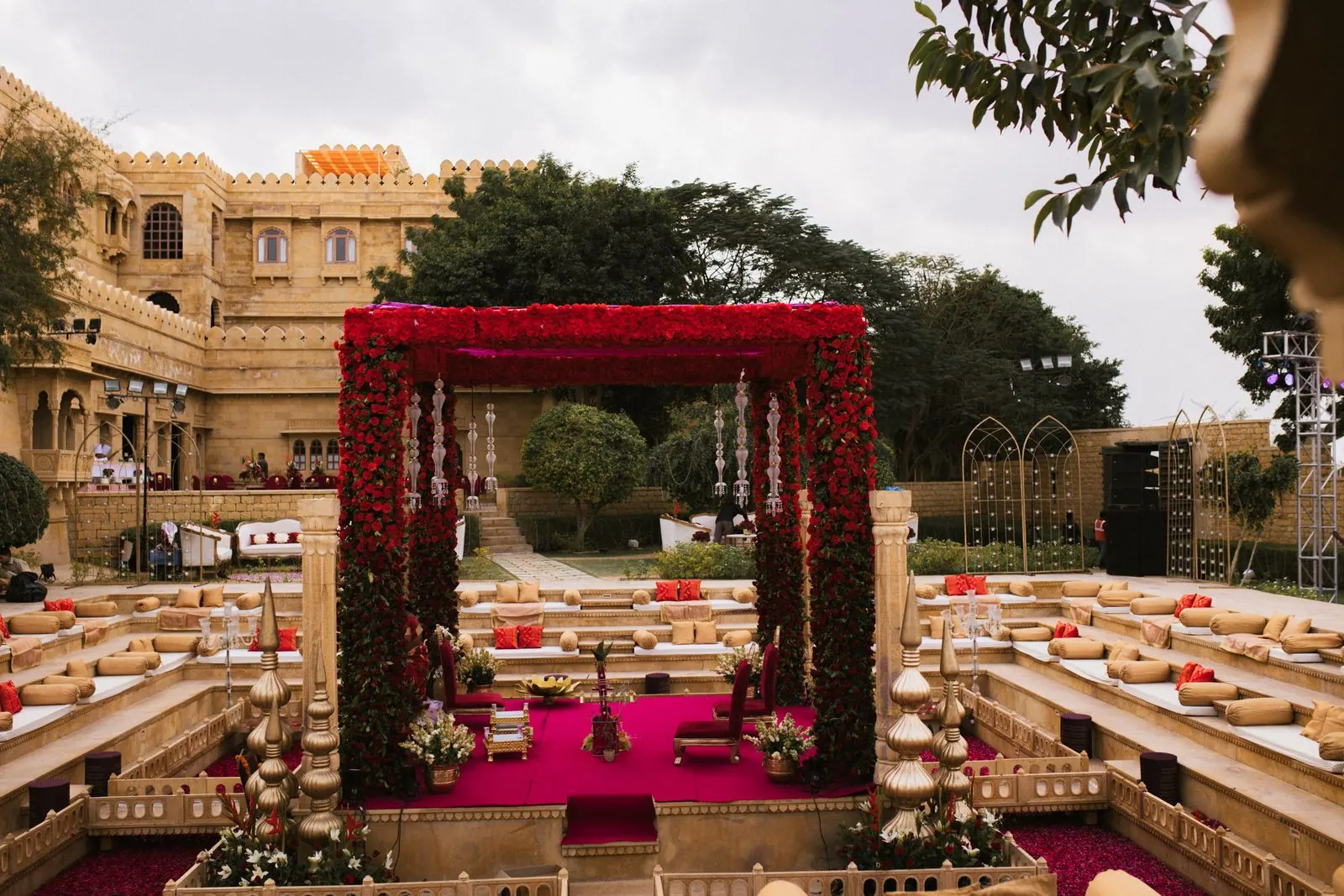
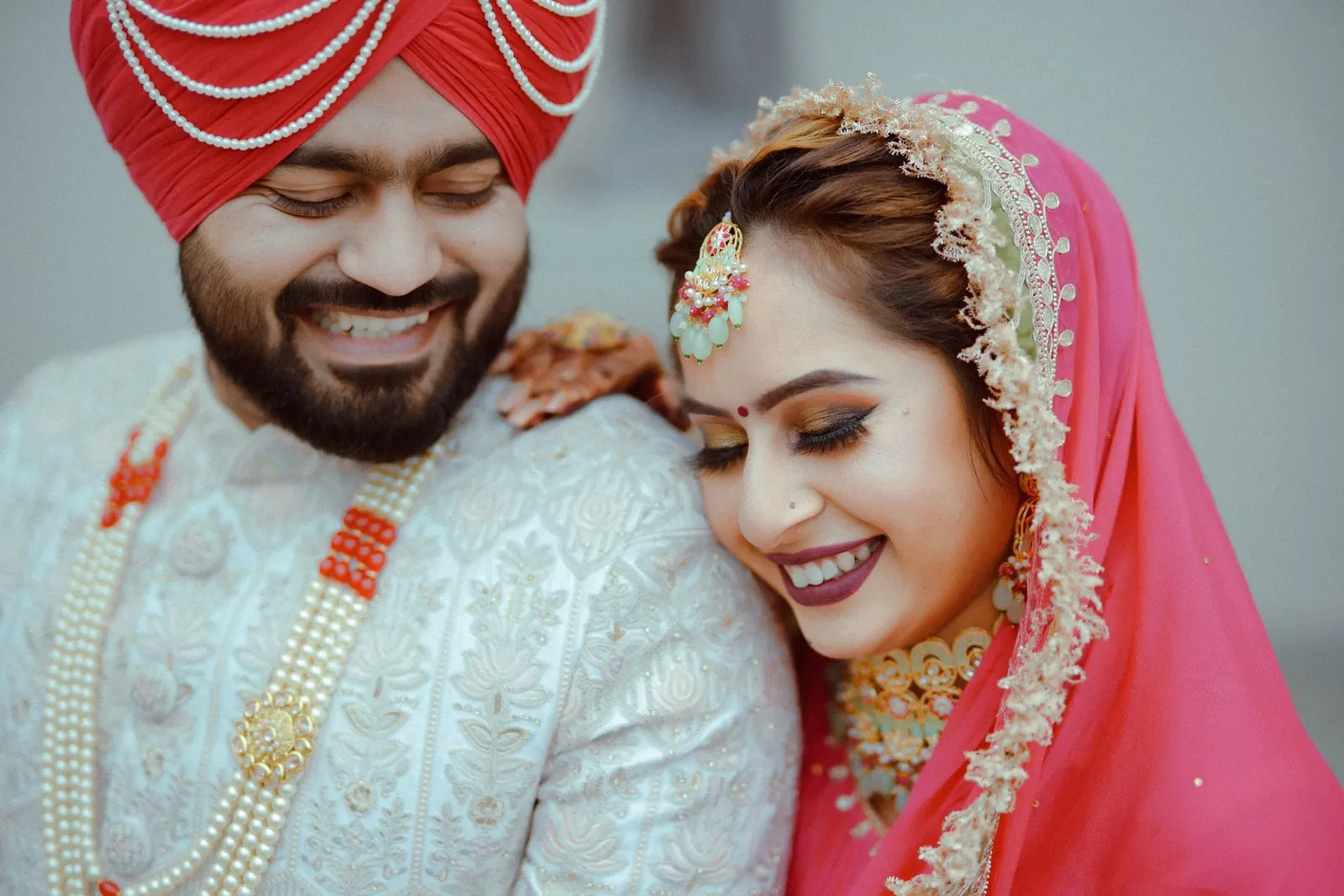
An AI wedding photoshoot lets a guest take a selfie and receive, a minute later, a polished portrait of themselves in a wedding scene: a floral mandap, a palace courtyard, a lake at dusk, the sangeet stage. The image is framed with the couple’s hashtag or monogram, ready to post.
Think of it as a portrait studio that every guest carries in their pocket. Nobody needs to queue, change outfits or find good light. The couple decides which scenes are on offer, and the guest decides whether to take part.
How it works, step by step
At an Indian wedding the flow is short enough for a Nani and quick enough for a cousin between dances.
- Open the wedding app. Guests use the same link or QR code they already have for the schedule and RSVP. No download.
- Agree, then take a selfie. A clear consent screen explains what the selfie is for and when it is deleted. Only then does the camera open.
- Pick a scene. The couple has pre-approved a small set: the mandap under chandeliers, a Rajasthani palace courtyard, a lake at golden hour, the sangeet stage in full colour.
- Choose “with the couple” (if offered). If the couple has opted in, the guest can appear alongside them. If not, the option simply isn’t there.
- Receive the framed portrait. It arrives with the couple’s hashtag or monogram and a share button sized for Instagram stories.
Scene ideas couples like
| Scene | Works best for |
|---|---|
| Floral mandap with chandeliers | The wedding day itself |
| Palace courtyard with marigold garlands | Destination weddings in Rajasthan |
| Lake at dusk | Udaipur, Kerala backwaters, hill weddings |
| Sangeet stage with lights | The night everyone dresses up |
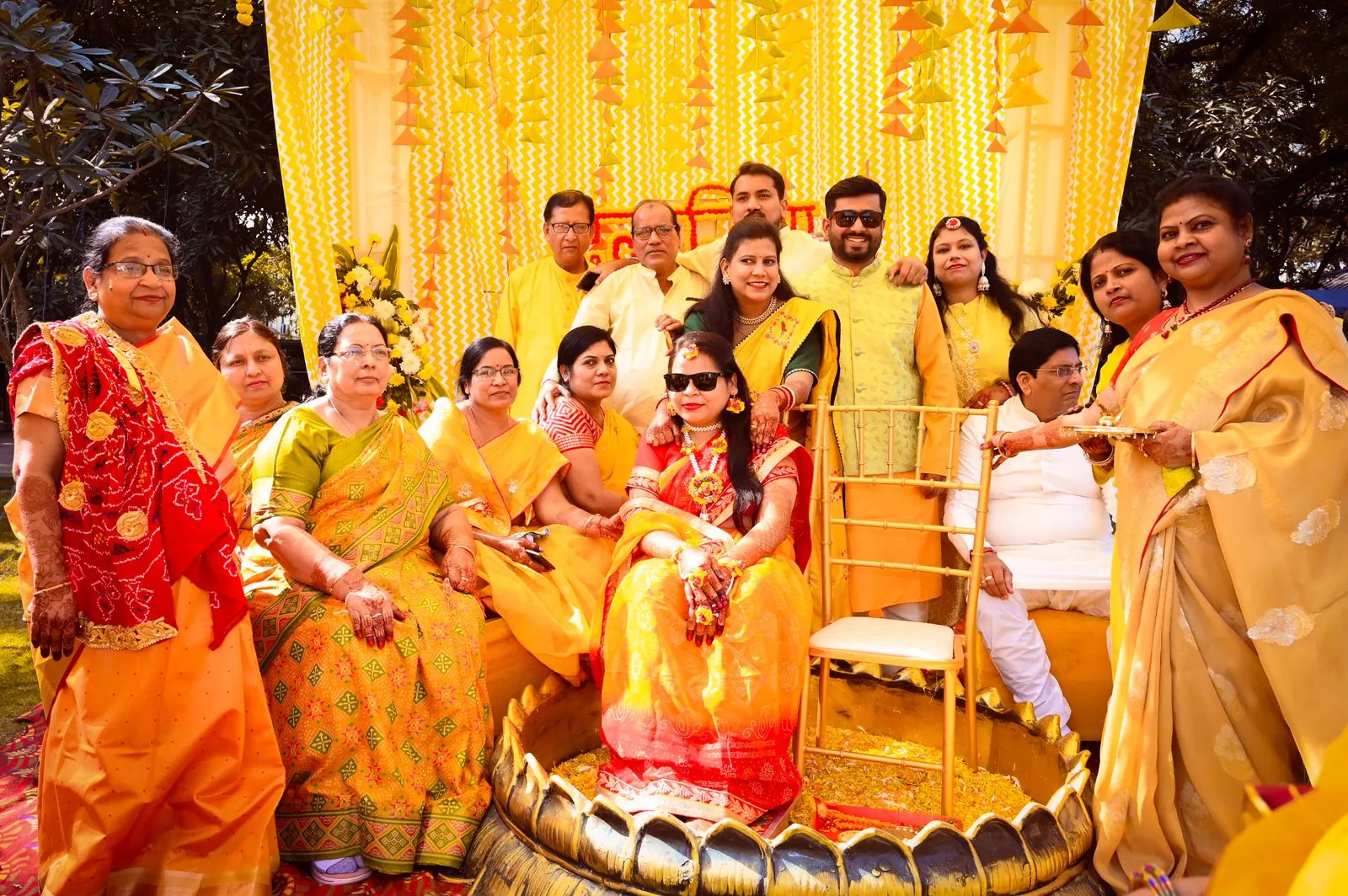
| Haldi courtyard in yellow | Daytime, family-heavy functions |
Why guests love it
Most guests leave a wedding with blurry phone photos and a long wait for the official album. An AI portrait gives them something beautiful on the night, of themselves, in a setting that matches how they felt.
It also includes people who are usually left out of the frame: the elderly relative who skipped the dance floor, the friend who flew in for one function, the uncle who is always the one holding the camera.
Why couples love it
Every portrait carries the couple’s hashtag or monogram, so every story a guest posts points back to the wedding. Instead of chasing guests for photos, the celebration spreads on its own, in a consistent, on-brand style the couple chose.
Couples also stay in control. They approve the scenes, decide whether they appear in guest portraits at all, and can switch the feature off for any function, say a quiet pooja, where it doesn’t belong.
Consent: the couple’s and the guest’s
An AI photoshoot touches two people’s likeness, so it needs two yeses.
- The couple’s consent. Guests should only be able to generate images with the couple if the couple has explicitly opted in. Scenes are limited to the ones they approve, so nobody can place them somewhere unsuitable.
- The guest’s consent. Each guest agrees before their selfie is captured, in plain language, and can decline without missing anything else in the app.
A good rule of thumb: if a guest would be surprised by how their face was used, the consent screen wasn’t clear enough.
Privacy under India’s DPDP Act 2023
A selfie is personal data, and India’s Digital Personal Data Protection Act, 2023 sets the standard for handling it. Section 6 requires consent to be “free, specific, informed, unconditional and unambiguous with a clear affirmative action”, and limited to the data necessary for the stated purpose. Guests can also withdraw consent as easily as they gave it.
Section 8(7) adds that personal data must be erased once consent is withdrawn or “the specified purpose is no longer being served”. For an AI photoshoot, the purpose is a single portrait. So the right design is simple: use the selfie once, then delete it. Guests keep their portrait; the app doesn’t keep their face.
The AI labelling rules: IT Rules amendment, 2026
India’s Ministry of Electronics and Information Technology notified amendments to the IT Rules on 10 February 2026, effective 20 February 2026, covering what the rules call “synthetically generated information”: audio or visual content created or altered by a computer so that it appears real.
Under the amendment, platforms that let users create such content must label it prominently, so that it is “easily noticeable and adequately perceivable”, and embed permanent metadata or other technical provenance markers where technically feasible. An earlier draft had proposed a label covering a fixed share of the image; the final rules dropped the percentage but kept the requirement that the label be prominent.
For couples, the practical step is simple: ask your provider how it handles these obligations — how labelling and provenance metadata work on the images guests share — so the fun stays on the right side of the rules.
AI photo booth vs. app-based AI photoshoot
Physical AI photo booths, with a screen, a camera and often a printer, are increasingly common at receptions. Here’s how they compare with a photoshoot that lives inside the wedding app.
| Physical AI photo booth | App-based AI photoshoot | |
|---|---|---|
| Where it works | One spot, one function | Every guest’s phone, every function |
| Queues | Common at peak moments | None |
| Guests who can’t travel | Left out | Can join from anywhere |
| Prints | Often instant prints | Digital, made for stories |
| Couple-approved scenes | Depends on the vendor | Set by the couple in advance |
| Selfie handling | Ask the vendor | Should be used once, then deleted |
A booth can be a lovely sangeet centrepiece. If you hire one, ask the vendor the same questions you’d ask of an app: how consent is captured, how long faces are stored, and how outputs are labelled.
How to set one up for your wedding
Start with your scenes and your hashtag, then decide on the “with the couple” option together. Keep the choice of scenes small, four or five is plenty, and match them to your functions.
The LIT VOW app includes an AI Photoshoot alongside RSVP per function, a shared guest gallery and a Selfie Photo Finder, all behind a private PIN. If you’re still deciding between formats, our guide to a wedding app vs. a wedding website walks through the trade-offs, and you can talk to us about scenes for your venue.
Sources
- MediaNama: MeitY notifies IT Rules amendments on synthetic media and deepfakes
- Freshfields: India targets deepfakes and AI-generated content, key changes under MeitY’s 2026 amendments
- Business Today: Govt tightens rules on AI-generated content, mandates labels and faster takedowns
- DPDP Act 2023, Section 6: Consent
- DPDP Act 2023, Section 8: General obligations of Data Fiduciary
Frequently asked questions
What is an AI wedding photoshoot?
It's a feature in a wedding app or booth that takes a guest's selfie and generates a styled portrait of them in a wedding scene, such as a mandap or palace courtyard. The result is clearly labelled as AI-generated and framed with the couple's hashtag or monogram.
Do AI-generated wedding photos need to be labelled in India?
Yes. The IT Rules amendment notified on 10 February 2026 and effective from 20 February 2026 requires synthetically generated content to be prominently labelled and, where technically feasible, to carry permanent metadata or provenance markers. Ask your provider how its images meet this.
Is it safe to upload a selfie for an AI photo at a wedding?
It should be, if the app asks for clear consent, uses the selfie only to make your portrait, and deletes it afterwards. India's DPDP Act requires personal data to be erased once its purpose is served, so ask how long your selfie is kept before you upload.
Is an AI photo booth better than an app-based AI photoshoot?
A physical AI photo booth is a fun focal point at one function, but it creates queues and only reaches guests who walk past it. An app-based photoshoot works from every guest's own phone, across every function, including relatives who couldn't travel.

LIT VOW Editorial writes about Indian weddings — functions, guests, destinations and new ideas like the AI Photoshoot — for couples across India and abroad.